
- All
- Product Name
- Product Keyword
- Product Model
- Product Summary
- Product Description
- Multi Field Search
Views: 0 Author: Site Editor Publish Time: 2026-02-03 Origin: Site


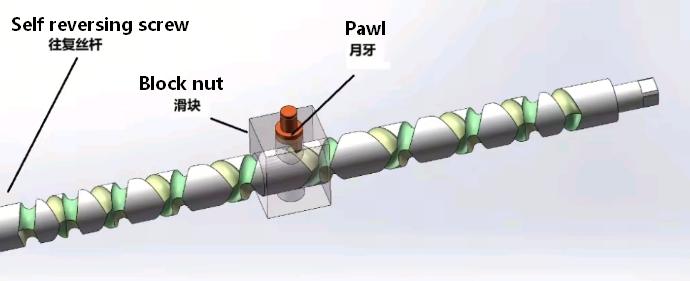
A self reversing screw assembly consists of three parts: the self reversing screw shaft,the pawl(follower blade),and the block nut.The operating principle of self reversing screw mainly relies on its unique spiral groove design.Unlike traditional lead screws with a single-direction thread,it consists of two thread grooves with the same pitch but opposite rotation directions,connected by smooth transition curves to form a closed spiral track.
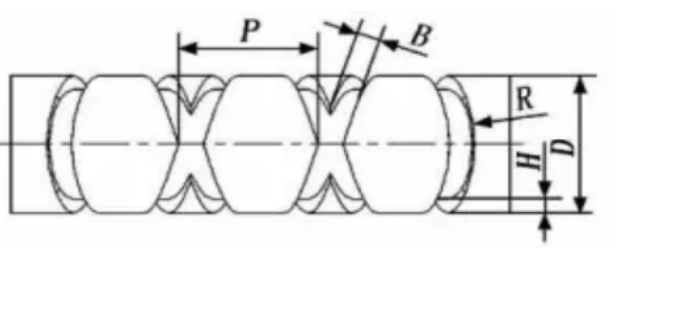
When the screw is driven to rotate unidirectionally by a power source,the side of the spiral groove exerts a continuous thrust on the pawl,pushing the pawl and nut block to move axially along the self reversing screw shaft.
Without changing the rotation direction of the self reversing screw,the pawl and nut block can automatically move in the reverse direction,thus realizing continuous axial reciprocating motion.This design not only simplifies the transmission structure but also avoids the impact caused by frequent commutation of the motor,ensuring stable and smooth operation.
Due to these advantages,self reversing screws are widely used in CNC machine tools,industrial robots,medical equipment,oilfield equipment and other fields.They provide stable and precise transmission support for the lifting control of laser cutting machines,the fine movement of surgical robots and the reciprocating operation of oilfield equipment,becoming an indispensable core component in the precision transmission industry.


